Founder storyHealth Tech
7 min read
A Smartphone Can Already Sense Your Heartbeat. But Can It Detect Disease?
HeartScan is trying to turn an ordinary smartphone into a heart-monitoring tool. But the road from measuring chest vibrations to a medically meaningful answer has turned out to be far harder than building an algorithm that works. Founder Michal Barodkin told BYGRID why seismocardiography is getting a second chance, what the team learned from 3.5 years of user data, and what is keeping HeartScan from moving on from a wellness app to a clinical instrument.
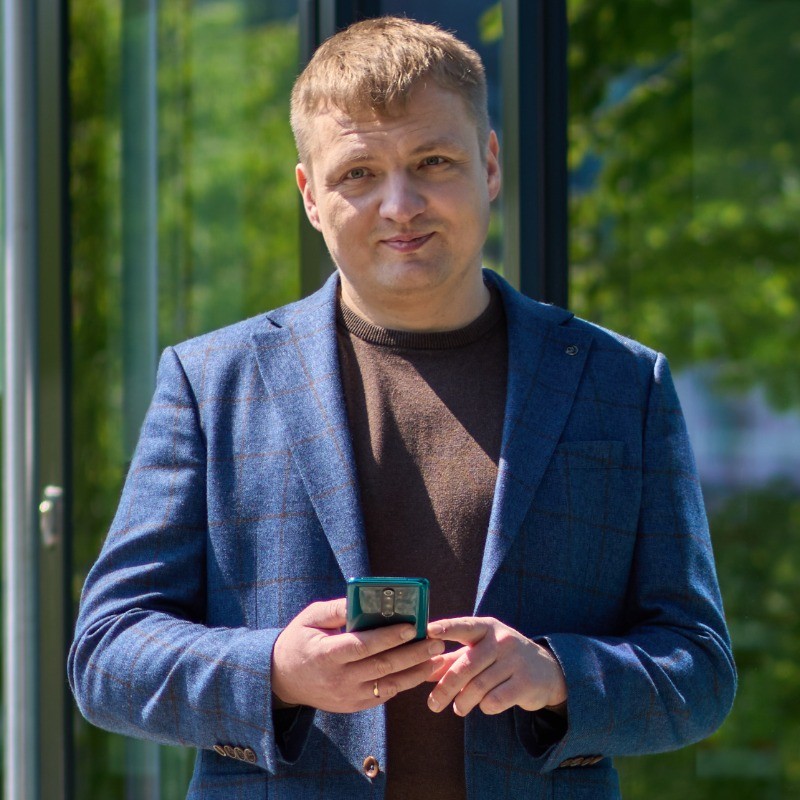
Photo: Michal Barodkin
HeartScan in numbers
Product path — Wellness → MedTech
- Downloads
- 2M+
- Anonymized user recordings
- 600K+
- Phone models tested
- ~9,000
- Founded
- 2022
Contents
01Technology
From engine diagnostics to monitoring heart signals
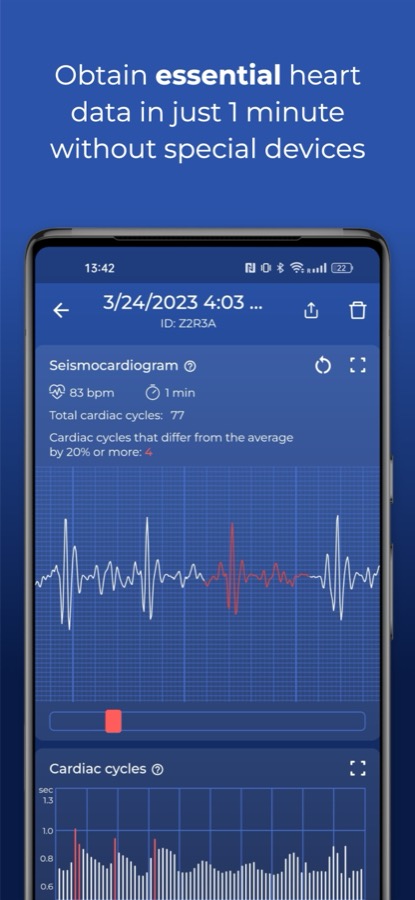
Image credits: Heartscan
The seismocardiography (SCG) method behind the HeartScan app has been known since the 1950s. While an electrocardiogram (ECG) records the heart’s electrical activity, SCG captures the heart’s mechanical activity. The method was used in aerospace medicine and long remained a purely research tool. Today this technology can be applied on a mass scale thanks to MEMS accelerometers – microelectromechanical sensors built into almost every smartphone. They’re sensitive enough to pick up even small vibrations in the chest. On top of that, signal-processing algorithms and machine learning have come a long way.
HeartScan records the heart’s mechanical signals using a regular smartphone (you don’t even need to install the app). Just lie down, place the phone on your chest, and start the measurement. The app records the vibrations, determines heart rate, and isolates individual heart cycles. The recording is saved and can be exported as a PDF to show a doctor.
The HeartScan website also has a reference guide showing different cardiac patterns – premature contractions, irregular rhythm, and other abnormalities. So you can compare your own recording against examples and see how your signal differs. Unusual patterns can be a reason to get a full checkup. Cardiologists react differently to HeartScan’s graphs: some struggle to interpret them, while others spot signs of arrhythmia right away. Even then, a single recording isn’t enough – if pathology is suspected, an echocardiogram (ultrasound of the heart) may be needed in addition to an ECG.
After all, the heart is a pump: it contracts, moves fluid, creates vibrations. Why not try the vibration analysis techniques used for machinery?
For Michal Barodkin, the introduction to SCG didn’t start with a scientific paper. It started with his own arrhythmia attack. He’s a physicist by training, and before launching HeartScan, he worked on an app for diagnosing internal combustion engines. He experienced episodes of arrhythmia and knew firsthand how hard they are to diagnose: by the time you get to the doctor, the arrhythmia is gone, your symptoms are gone, and then the attack happens again. He was lucky enough to see a good cardiologist who made the right diagnosis, explained how to handle it going forward, and prescribed medication.
But then, after he’d emigrated, the attack happened again, and an unexpected thought occurred to him. “After all, the heart is a pump: it contracts, moves fluid, creates vibrations,” Michal recalls. “Why not try the vibration analysis techniques used for machinery?” So he opened the prototype app he’d been working on, put the phone on his chest, and recorded the readings.
“When I saw the repeating peaks and realized some of them corresponded to distinct phases of the heart cycle – like the opening and closing of valves – I thought I was on the verge of a scientific discovery!” he recalls. But then he started digging into the scientific literature and discovered the seismocardiography method already existed.
02Data & validation
600,000 recordings, but not a clinical dataset
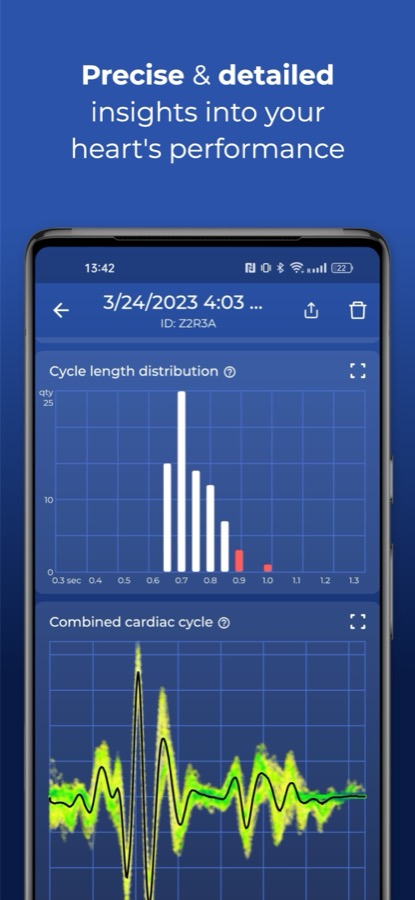
Image credits: Heartscan
For HeartScan, the MEMS accelerometer is a key component in a smartphone, because sensor sensitivity, sensor placement and onboard signal processing vary from phone to phone. The app has been tested on data from about 9,000 models and configurations. It lets the algorithm work correctly across a wide range of phones. Breathing, movement, the surface someone’s lying on, and the device’s own position all affect the recording too.
“So for us, it’s not just about capturing the vibrations – it’s about finding the useful heart signal within the noise and making recordings from different devices comparable,” Michal explains. “To solve that, we developed an algorithm that converts the three-axis accelerometer signal into a one-dimensional one and automatically detects aortic valve opening events even in noisy recordings.” (You can read more about it here.)
To develop and validate our own diagnostic method, we need thousands of patients with a confirmed disease – and thousands more who definitely don’t have it.
Today the app has a database of 600,000 user recordings from people who agreed to share their anonymized data for research purposes. But even that isn’t enough to make a diagnosis – for coronary artery disease, for example, one of the team’s main targets because the disease is difficult to detect early.
“To develop and validate our own method for diagnosing coronary artery disease, we need a dataset: thousands of patients with confirmed coronary artery disease and another few thousand who definitely don’t have it. Only then can you look for statistically significant differences and build algorithms,” Michal explains. If HeartScan got all the necessary approvals for medical diagnostics tomorrow, assessing the probability of coronary artery disease would be the very first new feature the app would add. After that, users would then be advised to undergo an echocardiogram to confirm the diagnosis.
For now, HeartScan doesn’t diagnose coronary artery disease or predict heart attacks. The team has run technical validation studies of the technology and has collaborated with the National Institute of Cardiology in Warsaw, but no full clinical trials have been conducted.
03Go-to-market
Caught between a wellness app and a medical device
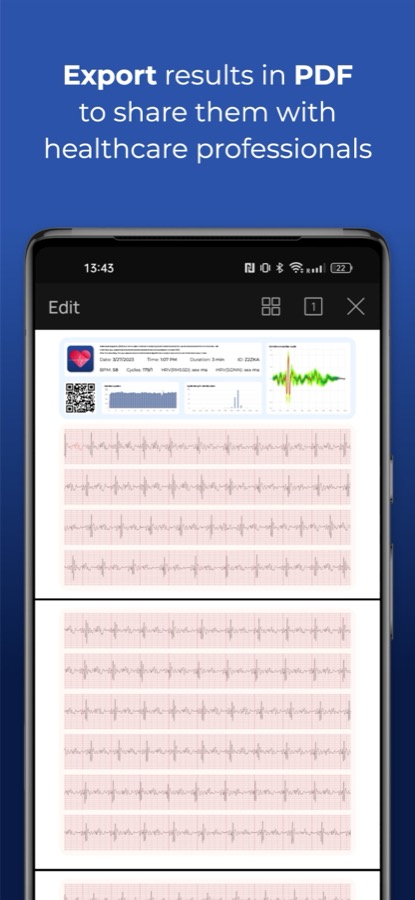
Image credits: Heartscan
HeartScan now has more than 2,000,000 downloads and 100,000 active users. Most of its organic users come from Japan, Italy, India, the US, Germany and France. But scaling the product in the B2C space is hard: user acquisition costs are high, and the user value isn’t strong enough yet. “The user wants a simple answer: am I healthy or sick, do I need to see a doctor. Nobody wants to record their heart every night just to get another graph. And to give someone a medically meaningful answer, you need clinical validation,” Michal explains.
There’s interest from B2B clients too, but they also need a medical certification. And funding the research required for that takes either investment or an already-established, large-scale business. “So the main question right now isn’t about moving from B2C to B2B. What matters more is generating clinical evidence and obtaining regulatory approval for a specific clinical use,” he continues.
Nobody wants to record their heart every night just to get another graph. The user wants a simple answer: am I healthy or sick.
One area where this technology could be applied, once the necessary approvals are in place, is post-surgical monitoring – instead of regular clinic visits, a person could record a signal at home while a doctor tracks the changes remotely.
But there’s another path forward too: scenarios where medical certification isn’t a strict requirement. For example, initial screening in regions without easy access to a cardiologist or medical equipment.
“We ran a pilot with a charity that was studying children’s health in remote regions of Senegal. They didn’t need complex graphs or heart-mechanics analysis. They just needed a way to measure pulse with an accessible device. Pulse served as one indicator in assessing a child’s overall condition, nutritional status, and whether they were developing appropriately for their age.” For the team, that’s an important example of how the technology can be useful beyond complex cardiac diagnostics.
Today, HeartScan is a revenue-generating app that can fund its own operations. The team keeps developing it because they see the value it provides to users and want to keep the app accessible. But they’re expanding in Africa, Latin America and Asia, where access to this kind of technology could matter most. “Our long-term goal is to turn the signal an ordinary smartphone can already record into a reliable heart-monitoring tool,” Michal sums up. “For now, HeartScan remains a wellness app and a research technology. We believe the heart’s mechanical signals contain much more information than pulse alone.”
BYGRID Team