NewsAIZurich
3 min read
Belarusian-founded GenPeach AI outperforms Meta, OpenAI and Google models in an image generation test
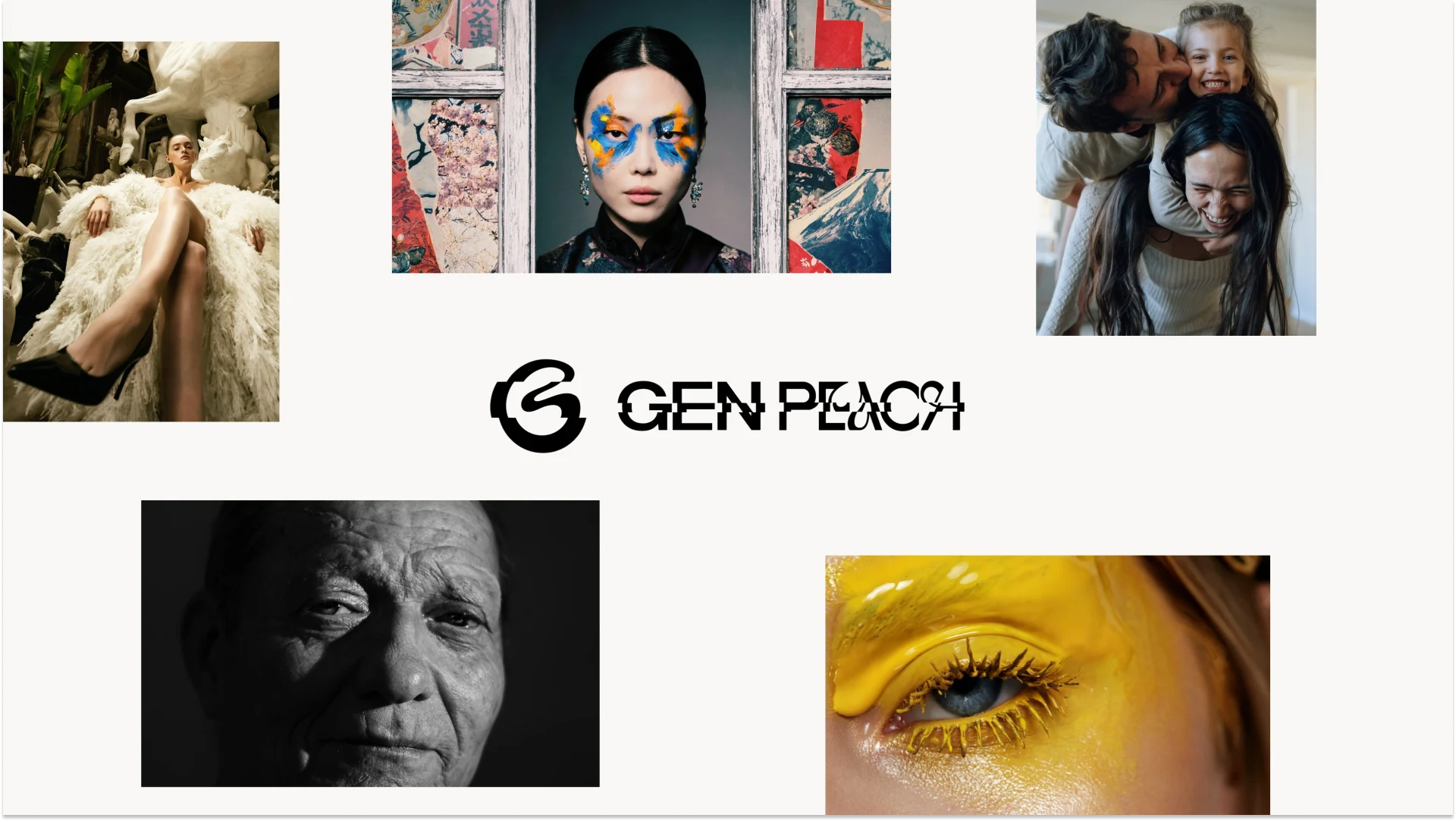
GenPeach AI, the startup co-founded by former Meta researcher Artsiom Sanakoyeu, came out of stealth and introduced its first image generation model, GenPeach v1 Preview, on 5 November. In a blind test using editorial and fashion photography briefs, experts rated 49% of GenPeach’s images ready to send to a client without edits. The figure was 24% for GPT-Image-2.5 Sunburst and 23% on average across eight competing models.
Contra Labs, a lab that uses human evaluators to assess creative AI products, ran the test for GenPeach. It recruited 53 creative professionals, including art directors, photographers and designers. Each model generated one image for each of 100 briefs, with no retries. Reviewers saw two images for the same brief and were kept blind to the names of the models.
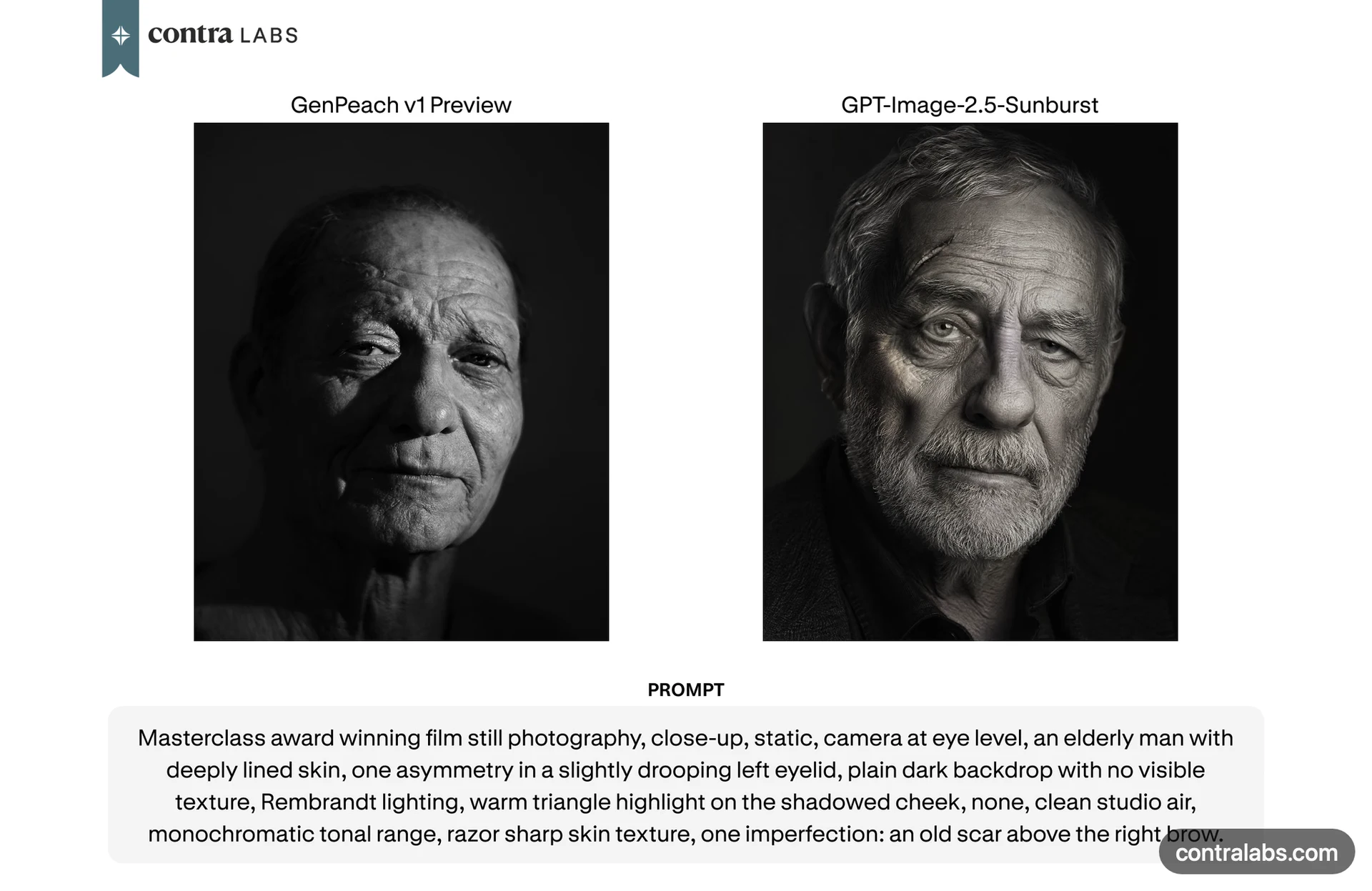
Image Credits: Contra Labs
GenPeach received 71% of votes in the head-to-head comparisons and won a majority on 88 of the 100 briefs. Google’s Nano Banana 2 came closest, taking 37% of votes in its matchup against GenPeach. Meta’s Muse Image took 35%.
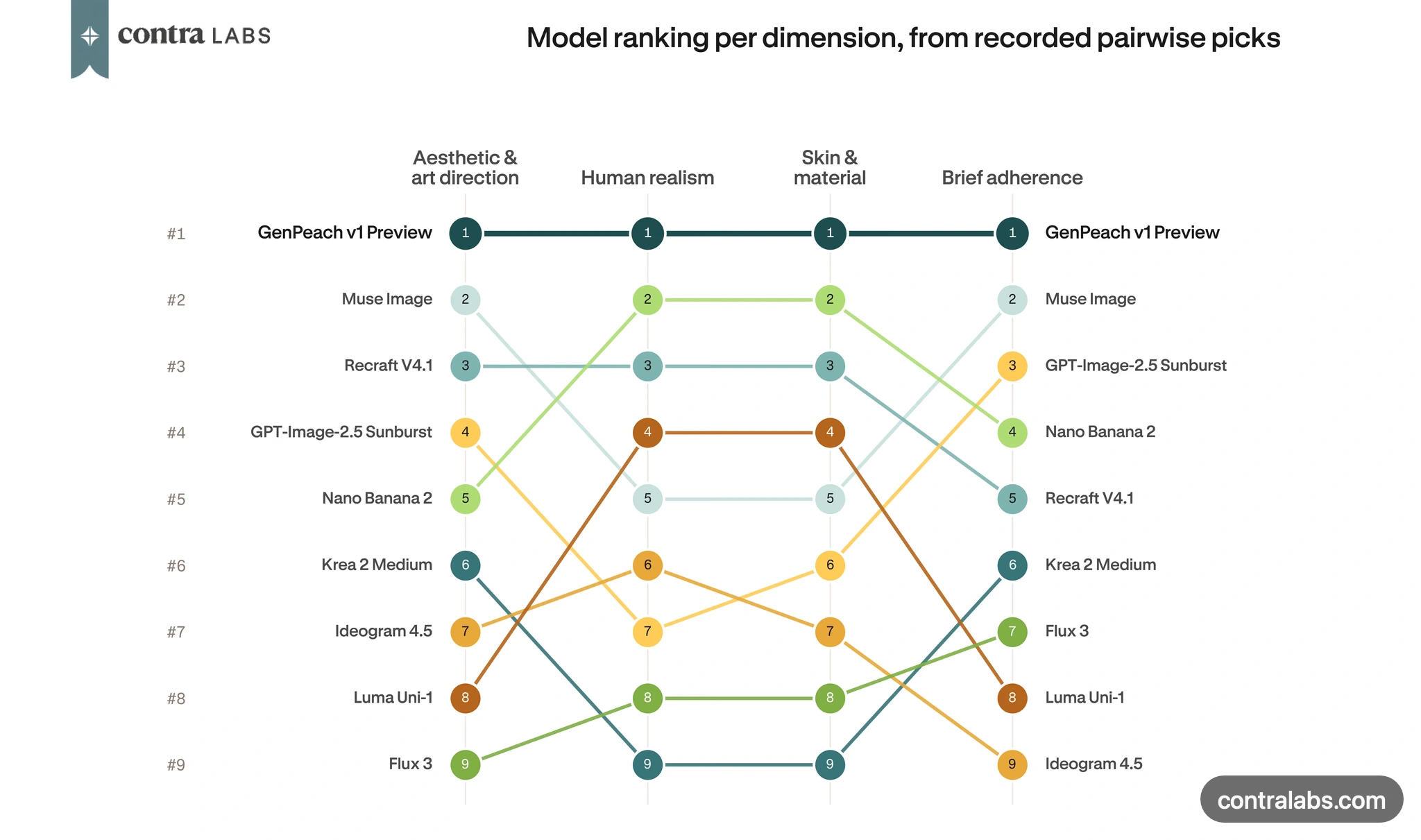
Image Credits: Contra Labs
The test focused on editorial and fashion photography with people as the subjects. Contra Labs says the results reflect how GenPeach performed against each rival in that setting.
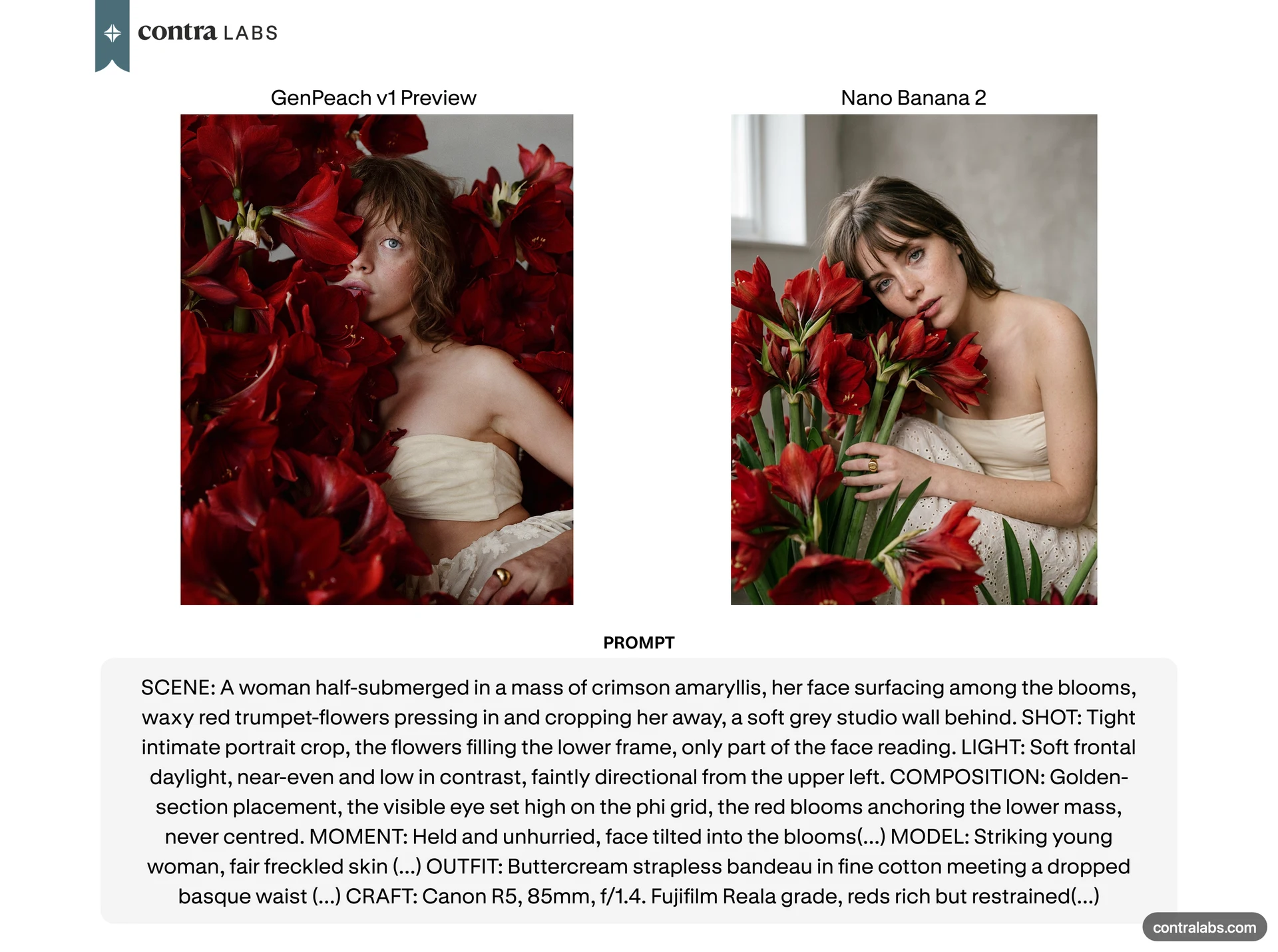
Image Credits: Contra Labs
GenPeach is based in Zurich. Sanakoyeu earned a PhD in computer vision at Heidelberg University and spent four years at Meta GenAI, where he helped lead development of the Movie Gen video model and the real-time image generation system Imagine Flash. His team trained its first model from scratch, starting with images of people. The model is available to a small group of users, with a waitlist on the company’s website.
According to Crunchbase, the startup GenPeach AI has raised $1.5 million in a seed funding round. Lead investors include Davidovs Venture Collective and KAYA. Earlier in the year, Sanakoyeu asked Flyer One Ventures general partner Vital Laptenok to spread the word about hiring in Zurich and Warsaw.
Following the presentation of the model in early November 2026, the investor commented on the outcome: "Artem spent four years at Meta. After leaving, he managed—in just one year—to build a solution that outperformed Meta’s own model." These are precisely the kind of founders, Laptenok says, that he wants to see in his fund’s portfolio: "Strong professionals who hire equally strong talent and achieve results like these."
If you found this useful, buy me a coffee. Your support helps me keep talking to founders and sharing what they’ve learned.
Buy me a coffee (opens in a new tab)BYGRID Team