Founder storyHealth Tech
8 min read
Hundreds of Thousands of Dollars in Medical AI — and a Turn Towards Beauty: What Is Happening at Skinive
Skinive began as an AI service for analysing skin problems from smartphone photos. The team invested hundreds of thousands of dollars in its own algorithm, obtained CE marking, and reached 1 million installs and 6 million skin checks. But while the startup was building medical AI, the market filled with apps based on ready-made generative models. Skinive is now turning towards wellness and beauty — and deciding whether to spend another €100,000 on medical certification. Cofounder Kirill Sokol explains what comes next.
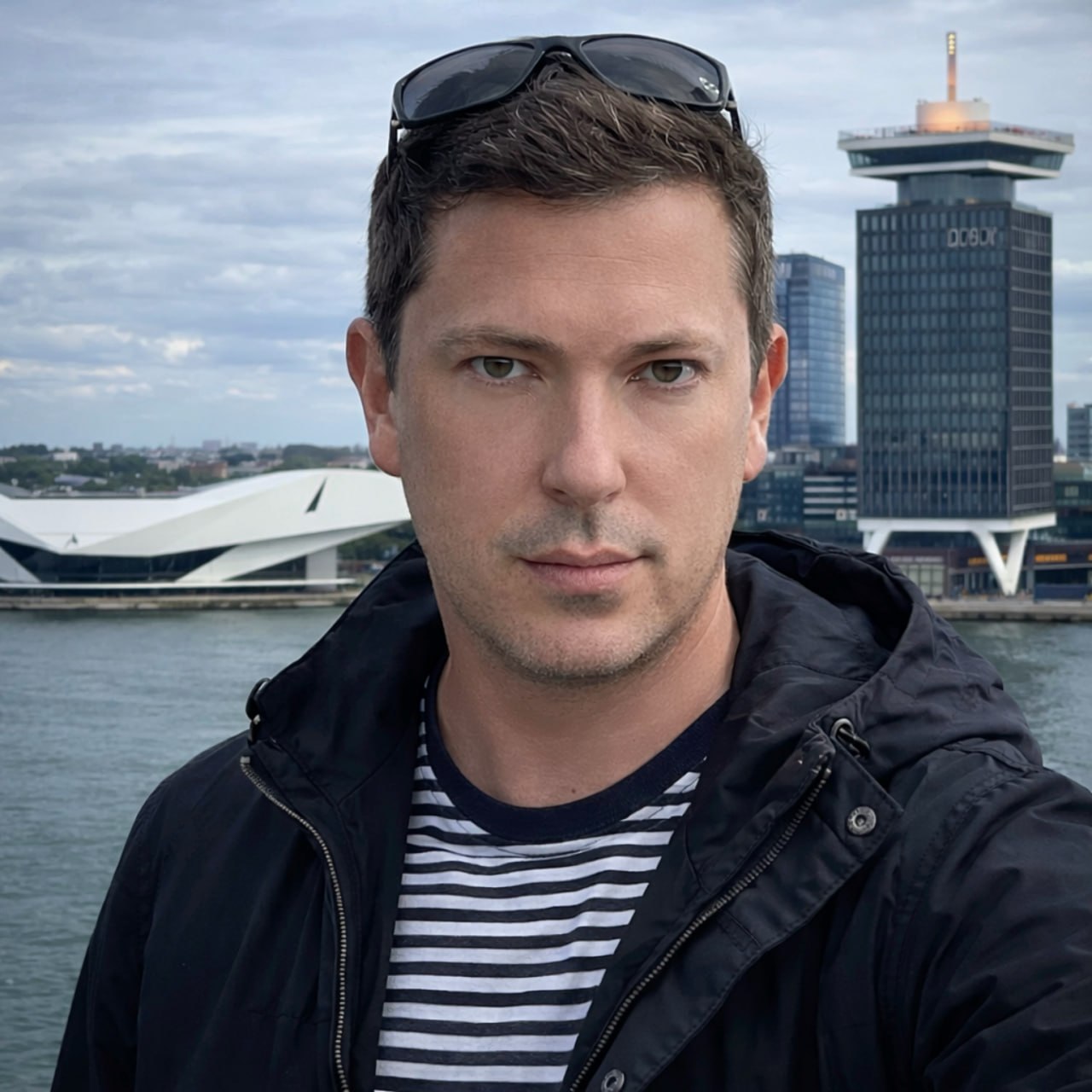
Photo: Kirill Sokol
Skinive in numbers
Founded in 2018 — MedTech → Wellness + Beauty
- installs
- 1M+
- skin checks
- 6.6M+
- images used in AI development
- ~3.5M
- estimated cost of moving to Class IIa
- €100K+
Contents
01PRODUCT
One AI Algorithm — Three Business Models
Skinive’s ecosystem now includes three products. Skinive App lets consumers independently track skin changes — including acne, papillomas, warts, dermatitis, moles, melanoma and other skin cancers, fungal infections, psoriasis and herpes — and monitor them over time. Skinive MD is a professional tool for general practitioners. Skinive API lets developers integrate the skin-analysis technology into their own products.
B2C has the broadest reach. Users carry out 100,000 analyses a month through the Skinive mobile app, and the number of active paying subscribers is approaching 1,000. Demand is strongest in Germany, Italy and France. Monetisation differs across markets: Italy, for example, brings installs, but users there convert to paying customers less readily, according to Kirill.
The professional business has proved more difficult. Skinive MD has reached around 50,000 installs, but B2B sales are challenging. The company has therefore largely stopped promoting it and now maintains the software through updates.
API sales, however, have found more demand. Skinive currently has several dozen active paying clients, including pharmaceutical companies, insurers, digital health developers, telemedicine services and beauty apps.
The company initially tried to develop products for consumers and the professional market simultaneously. Yet its clearest recurring-revenue model has emerged only in B2C — despite the startup having cleared one of the main barriers to operating in the medical market: product certification.
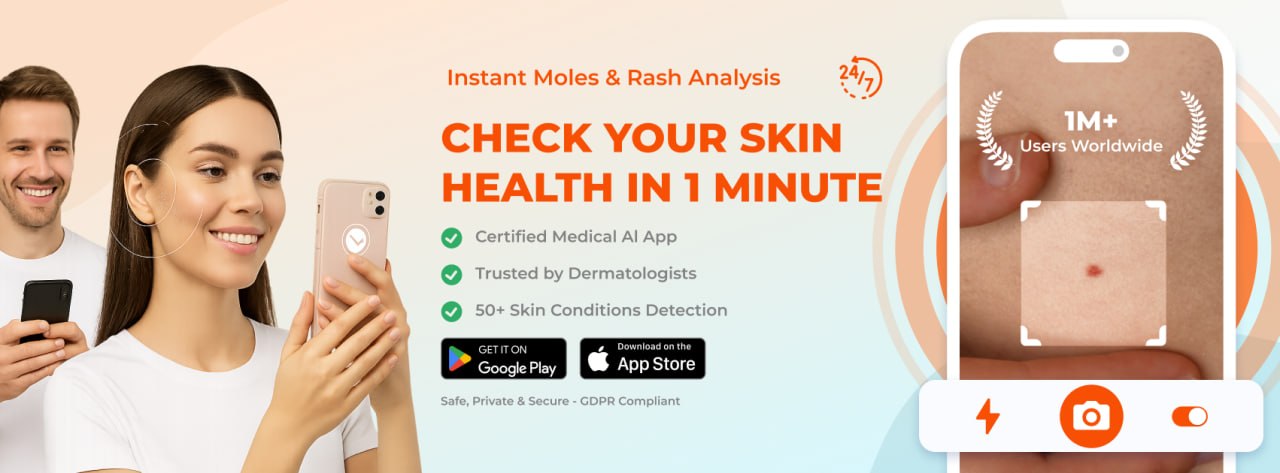
Image credits: Skinive
02REGULATION
CE Marking and MDR: The Cost of Being Medical AI
The founders began thinking about medical certification at the very start of the project. They obtained their first CE marking in 2021 under the Medical Devices Directive (MDD), which was in force at the time. The marking is required to operate in the European Union and European Economic Area and confirms product safety for people and the environment. MDD was soon replaced by the Medical Device Regulation (MDR), whose rules significantly raised the requirements for documentation, clinical evidence, risk management and product development overall.
Skinive adapted its product to MDR and now offers Class I medical software. Under its stated intended use, users can monitor skin problems and identify conditions they visually resemble. The app does not, however, provide information for diagnostic or therapeutic decisions: under MDR, that functionality falls into at least Class IIa and requires a more complex conformity assessment.
Skinive is considering that move, but it would require a stronger evidence base. “For example, the review of peer-reviewed scientific literature alone is 40–50 pages,” Sokol says. “And beyond that, we would need fresh algorithm validation and clinical studies.”
According to Sokol, preparing the current Class I configuration cost €20,000–30,000. He estimates the move to Class IIa at a minimum of €100,000. The startup has already invested hundreds of thousands of dollars in developing the technology. “And now the question is whether it is worth burning through revenue to obtain the next classification,” Kirill says.
And now the question is whether it is worth burning through revenue to obtain the next classification.
03ENTERPRISE
B2B Sales in MedTech: 105 Questions Before the First Test
Certification does not remove the need for further checks by major clients. Skinive is negotiating with a large Spanish company, for example. A potential contract would give the startup access to an audience of a million, but the client’s requirements match that scale. The information-security review alone involves 105 questions from its compliance team. Preparing the answers took three days. The client then requested additional corporate documents, and only after that did the two sides move on to agreeing an internal test of the technology.
“MDR certification simply gives you access to the market. Whether you can actually operate in that market is the next question,” Sokol says.
Enterprise clients also conduct their own technical and clinical validation and may impose additional requirements on a startup’s research. Results from clinical validation in one European country, for instance, may not be enough for a client in another. A potential French partner might require a dataset collected specifically from the French population.
MDR certification simply gives you access to the market. Whether you can actually operate in that market is the next question.
04DATA & VALIDATION
Millions of Skin Photos: How Medical AI Is Validated
Over the years, the startup has assembled a database of 6.5 million photos, 95% of them taken on ordinary smartphones. Skinive’s real-time scanner was developed using 3.5 million images. For a product designed for use outside a clinic, this matters: medical datasets often contain images captured in controlled conditions or with specialist equipment, giving them higher quality. Users, meanwhile, photograph their skin on an ordinary phone — with different cameras and under different lighting conditions.
Skinive therefore checks image quality before analysis. If a photo has been taken incorrectly or contains irrelevant objects, the app asks the user to take it again. According to Sokol, the algorithm was also validated on skin of different ages and on photos taken with different devices. The team is now preparing the results of its work with real smartphone images for a scientific publication.
The company also has results from several unpublished evaluations of its AI algorithm. At one specialist dermatology centre, it was tested on 160 difficult cases — patients for whom specialists could not confidently determine the next course of action. According to Sokol, the startup’s algorithm correctly identified the need for further intervention in 80% of cases. Another evaluation in Colombia used 1,500 photos to test the technology on darker skin phototypes.
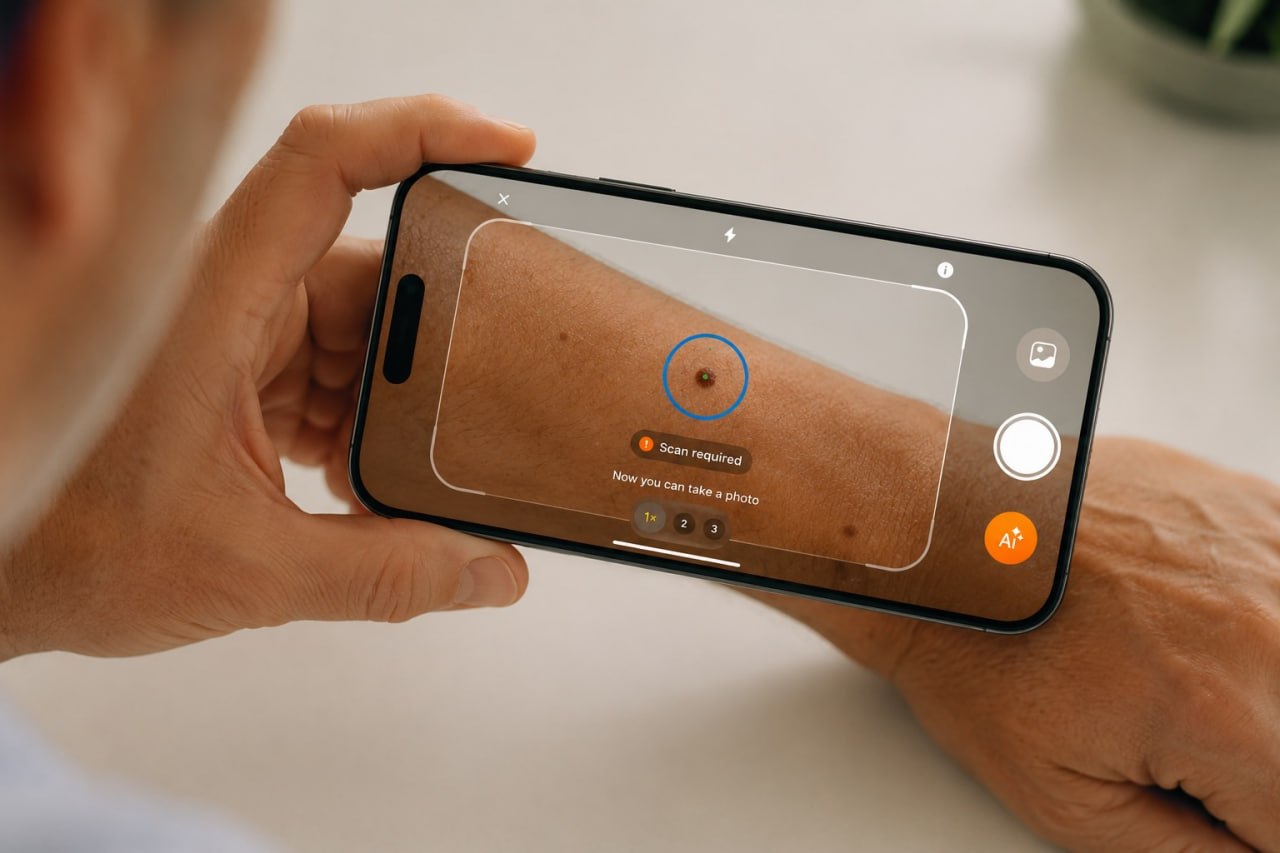
Image credits: Skinive
05COMPETITION
ChatGPT Versus Specialised AI
During the time Skinive spent developing its algorithms and obtaining medical certification, the market itself changed. The spread of large multimodal models sharply lowered the barrier to entry for AI apps. Today, an app-store search for Skin Scanner or Skin AI returns dozens of apps. Many are in the wellness category and do not follow the regulatory path Skinive took. Users may not see the difference. “We spent many years and a lot of money on development,” Sokol says. “And alongside us, dozens of apps appear that are simply wrappers around a ready-made model.”
Skinive compared its algorithm with ChatGPT on photos of moles. According to Sokol, the difference was substantial. Initially, for example, the neural network — trained, he notes, on images taken at maximum resolution and in ideal conditions — recommended showing a suspicious mole to a dermatologist. But when prompted with something like, “Look how beautiful it is! Just like Enrique Iglesias’s!”, the model immediately agreed: the mole was wonderful, something to be proud of. “You can twist ChatGPT’s results any way you like,” Kirill says. “For medical AI, that is a fundamental problem.”
Skinive is responding to the new competition through both technology and marketing. The company is changing its app-store positioning and explaining the difference between specialised skin AI and generic AI tools during onboarding. It is also investing in local content marketing, such as articles on finding dermatologists in specific cities. This helps bring people from search engines directly into the app. But a more significant change is happening in the product itself.
We spent many years and a lot of money on development. And alongside us, dozens of apps appear that are simply wrappers around a ready-made model.
06WELLNESS & BEAUTY
From MedTech to Wellness and Beauty
Checking a suspicious mole is an important but infrequent use case. Skinive’s team therefore decided to add features that could bring people back to the app regularly. One is UV Protection & Monitoring, which tracks ultraviolet exposure and provides personalised skin-protection recommendations. According to Kirill, introducing personalised features has already increased lifetime value and retention by almost 50%.
The next step is Face Scanner. Users photograph their face, and the algorithm assesses their skin and creates a personalised skincare routine with recommendations for specific products. Skinive plans to build its first commercial integration around the range offered by a Ukrainian pharmacy retailer. For Skinive, this could mean a different economic model: regular engagement, subscriptions and retail integrations rather than occasional checks of a medical risk. The company is also preparing its B2C product for a US launch in the Health & Fitness category. According to Sokol, Skinive’s partners estimate that the US market accounts for roughly two-thirds of revenue for comparable subscription apps.
The startup is not leaving MedTech. It retains CE marking and ISO 13485, continues building its clinical evidence base and is considering the move to Class IIa. Its API remains a separate B2B business. But the company is conducting its new product experiments where the path from technology to revenue is shorter.
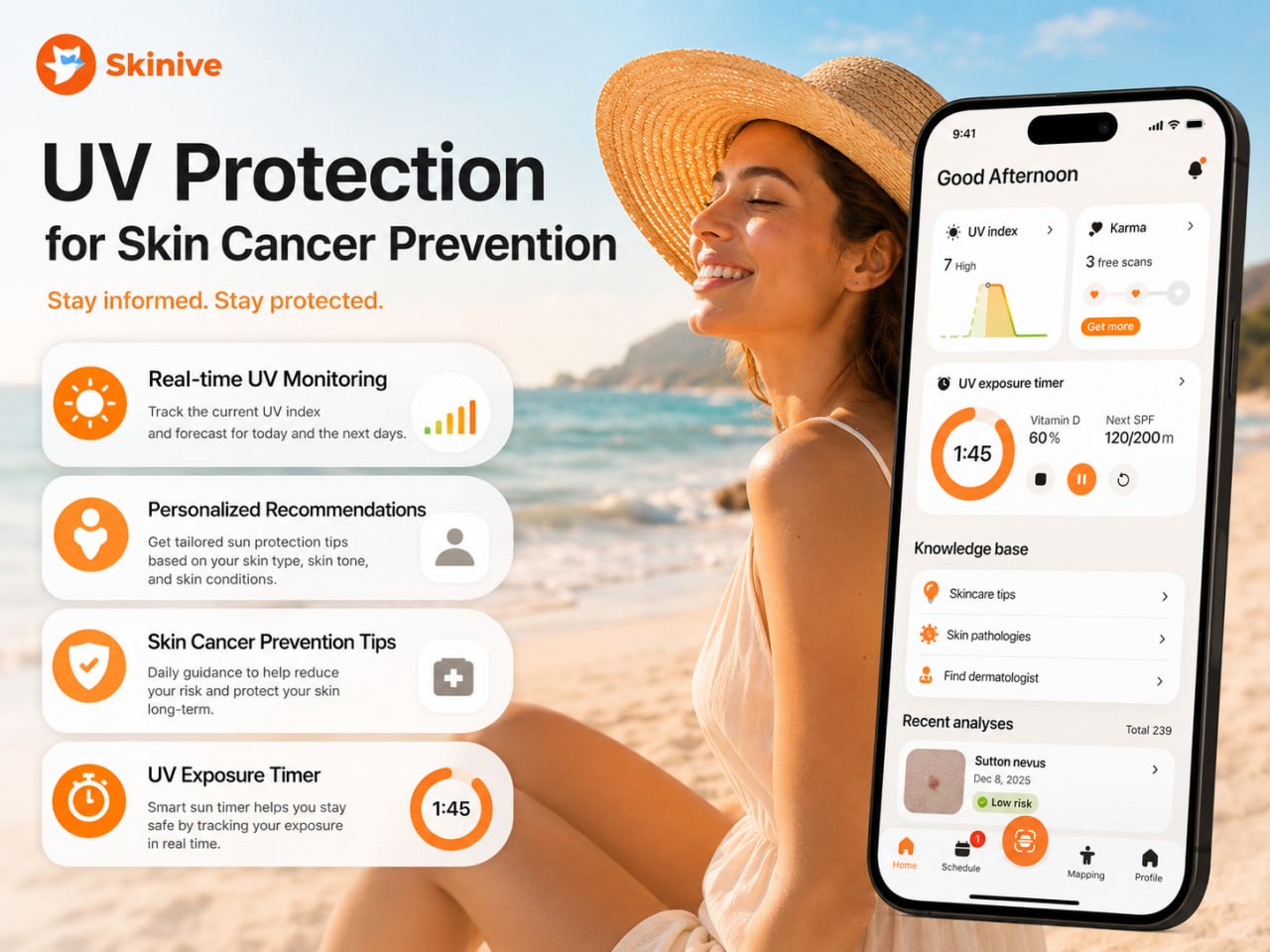
Image credits: Skinive
BYGRID Team