Interview TEDx Speaker
“I’m feeling completely anti-startup right now.”Dasha Danilova on exits, financial freedom and the price of a founder’s success
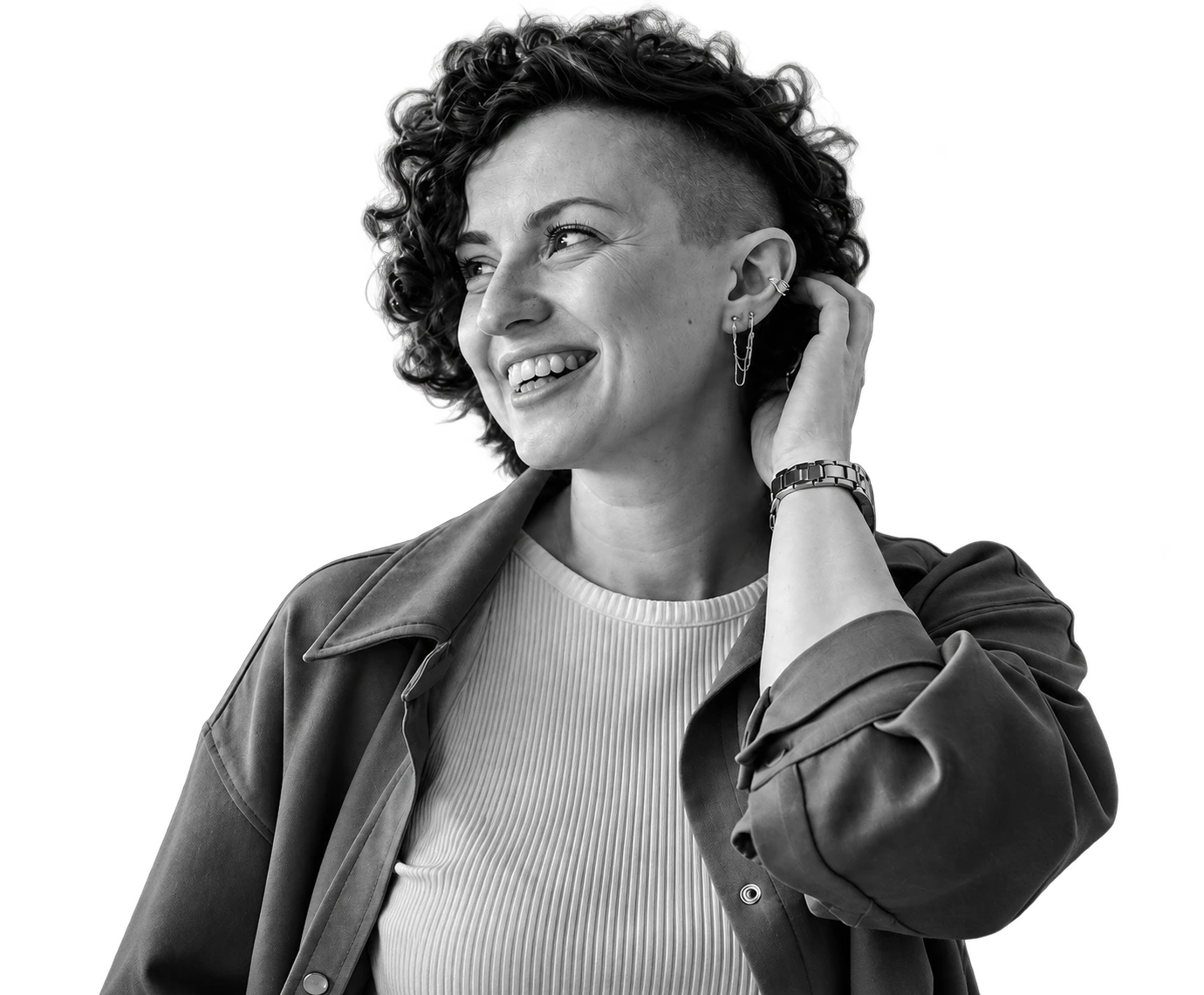
Dasha DanilovaCo-founder of RocketData, BrandWizard and ElatraPhoto courtesy of the interviewee.
Dasha Danilova is a serial entrepreneur with two exits to her name: the first deal to sell RocketData took place in 2021, and in September 2026, Sweden’s PinMeTo announced the acquisition of the client business of BrandWizard, which Dasha also co-founded. Ahead of her appearance at TEDxUlicaMińska Woman, we spoke about the price of entrepreneurial success and her disillusionment with the venture capital model.
Contents
01
The RocketData exit: “It was a wonderful, sweet deal”
In 2024, you said your final exit from RocketData, the online presence management platform, was due to happen in 2026. Where does the deal stand now? How successful has the exit been?
— The deal isn’t finished yet; negotiations are ongoing. Although RocketData is a Belarusian company, around 70% of its revenue comes from Russian clients. And the exit market for companies with that revenue mix is pretty depressed right now.
On top of that, the rouble exchange rate has changed considerably since 2021, when we signed the documents. So, although the company has grown several times over in five years — it had around 100 employees in 2021 and now has more than 300 — its dollar valuation doesn’t match our earlier expectations. We won’t be able to disclose the deal value even after it closes.
Let me rephrase that: what multiples did the investors who exited RocketData in 2021 achieve?
— It was a wonderful, sweet deal. Investors exited with excellent multiples — almost Silicon Valley-level, I’d say.
When we sold, we couldn’t agree on a final valuation, so we settled on an interim one. We agreed that an additional bonus would be paid based on how we performed against our 2021 business plan. In the end, we beat the plan and almost doubled the company’s valuation.
When you founded RocketData, you planned to sell it after five years. Why that particular timeframe?
— I was already 30 when we started RocketData. I figured it would be good to have financial stability by 35 and devote myself to my family. That was my life strategy: build a startup, sell it, make a lot of money and go on maternity leave. I always wanted that kind of motherhood — not squeezed in between investor calls, but truly all-in. To make that possible, I worked like a horse, 16 hours a day, putting so much off until ‘after the exit’. Of course, it hurts that just a month after selling the company, I ended up in prison (she was detained in Minsk on 18 May 2021 as part of the criminal case against the TUT.BY portal — editor’s note).
But back to the exit. Alongside the life strategy, there was a business rationale. RocketData was doing well in the Russian market and had already started expanding internationally. We reached a fork in the road: there were several potential Russian buyers, but they didn’t need the international market or a business that was too large. If there was a good offer on the table, it made sense to sell while the company was still predominantly Belarusian-Russian. If we didn’t sell, the international side would keep growing and those particular buyers would no longer be able to acquire it. Then a five-year horizon would become not six or seven years, but ten.
We also considered an alternative to a full exit: a partial cash-out and bringing in private equity funds.
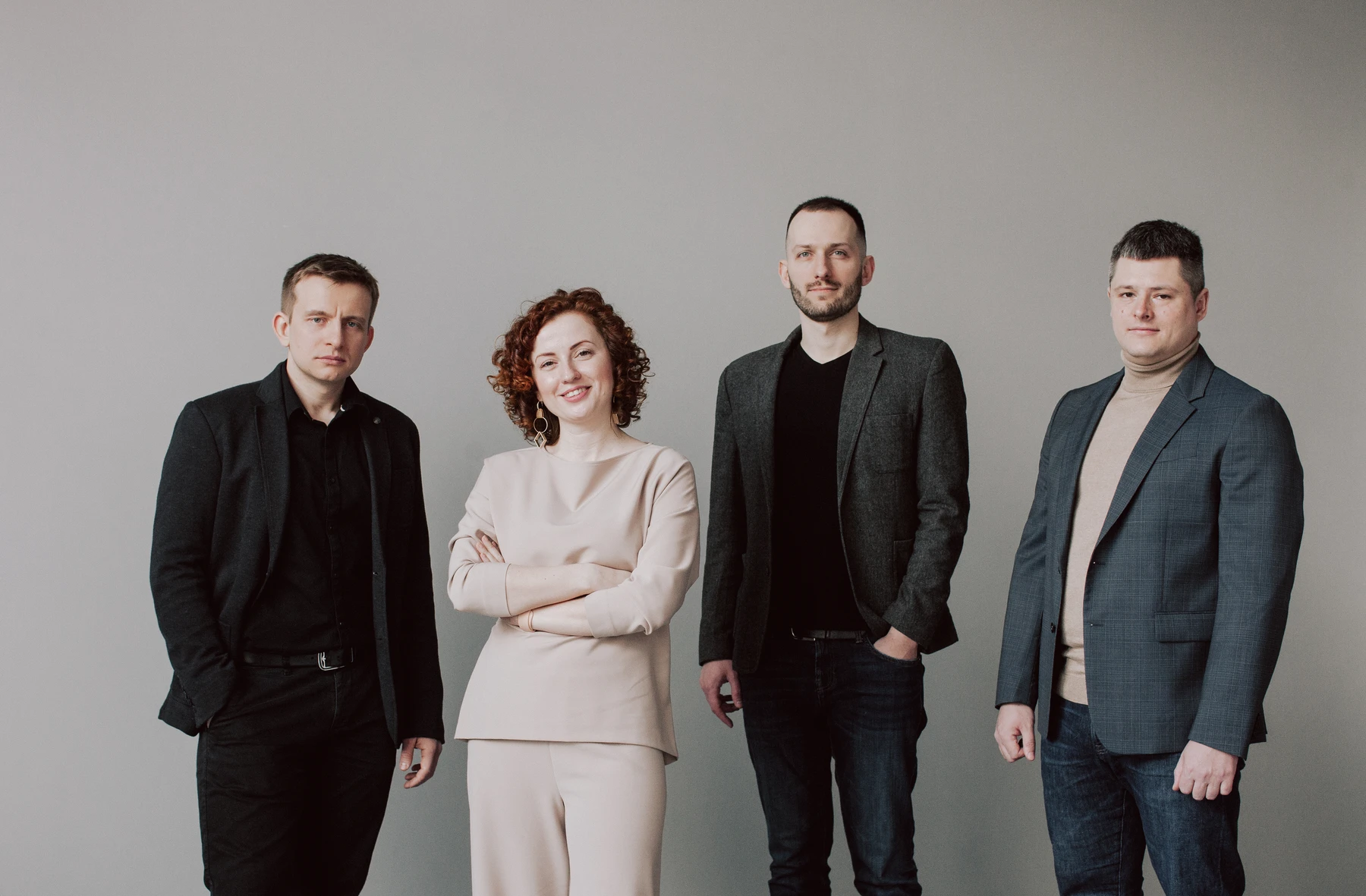
RocketData teamPhoto courtesy of the interviewee.
Investors exited RocketData with excellent multiples — almost Silicon Valley-level, I’d say.
02
BrandWizard: “We were simply salvaging part of what we had”
In September, Sweden’s PinMeTo announced it was buying BrandWizard’s client business. How did that company come about?
— It didn’t come about under happy circumstances. After the events of 2020, Belarus was placed on sanctions lists. Then the war between Russia and Ukraine began, and working with international clients became impossible. When even a client from Afghanistan told us they couldn’t work with us, we realised we’d hit rock bottom.
We had two options: either RocketData would shut down its international business, or the founders would buy out part of the intellectual property, develop it further and launch a separate company in Poland. That’s how BrandWizard came into being.
Essentially, it wasn’t an entirely new business. We were simply salvaging part of what we had.
How big was BrandWizard by the time of the deal, and why did you decide to sell?
— MRR was €70,000–80,000. We decided to sell because we’re fully exiting RocketData and no longer plan to develop our expertise in this field. Besides, BrandWizard wasn’t growing fast enough for us to make a big bet on it.
The buyer was a competitor, PinMeTo, which we’d known for a long time. We structured it as an asset sale: we handed over leads and moved clients onto their platform. That process is still ongoing. PinMeTo has almost identical technology. Adding ours to its product range would have been complicated and expensive, with no guarantee it would make sense. So we sold the assets, not the technology.
03
“Elatra didn’t become a unicorn, but there’s no reason to shut it down”
After RocketData and BrandWizard, you entered a different industry: corporate coaching. How did Elatra come about?
— It’s a story about inspiration. I’ve always had a coaching mindset. Even at RocketData, I saw my role less as making people work more efficiently and more as helping them find what they enjoyed doing — making work something they loved.
Once the company grew to 100 people, it was no longer possible to work with everyone that way. But I wanted people to keep enjoying their work, and I was thinking about making my next business more impactful.
After the exit, RocketData’s senior staff made good money from their options. We’d given options to around 40 team members, and many wanted to build something of their own. Natasha Drogolchuk, Elatra’s co-founder, was one of them. We talked a lot and arrived at the idea of a B2B coaching business. We started discussing Elatra in 2022 and launched it in 2023, during the post-Covid online coaching boom, when people had moved to remote work.
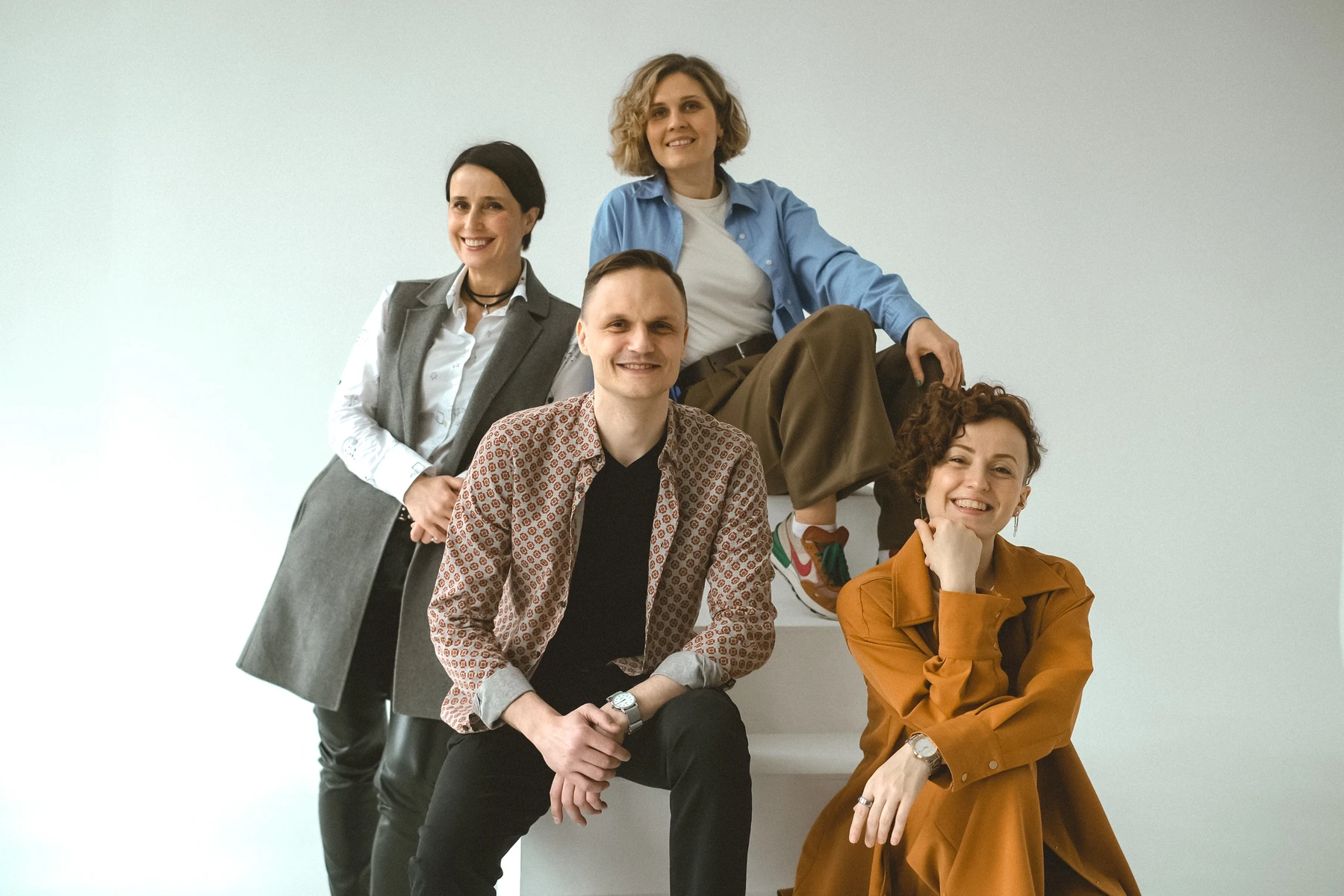
Elatra teamPhoto courtesy of the interviewee.
Elatra didn’t become a unicorn. MRR is now €25,000, and we have major recurring clients, but we’re attracting new ones slowly. Growth isn’t strong enough to call the company a major startup success and keep raising investment.
Why didn’t you become Elatra’s CEO?
— When you decide to build a startup and be its CEO, that means about five years of working 16-hour days. I knew I would go on maternity leave within a year or two, so I couldn’t make that promise to either the team or the investors. I decided to be a minority co-founder and adviser.
In 2024, Elatra’s MRR was around $11,000. What are its metrics now?
— Elatra didn’t become a unicorn. Its path has been similar to BrandWizard’s: it became a normal, functioning business. MRR is now €25,000. We have major recurring clients, but we’re attracting new ones slowly — one or two every six months. That growth isn’t strong enough to call the company a major startup success and keep raising investment.
At the same time, we have a small team and several major potential contracts we’ve been working on for over a year. Any one of them could be a game changer. But that hasn’t happened yet. We’re not raising anything.
How much of a technology business is Elatra, and how is AI affecting it?
— Technologically, it’s not a complicated business. We have a great methodology, strong quality control and good matching between coaches and clients.
We tried AI coaching, but corporations don’t believe in it. AI still isn’t good enough to be trusted with coaching a senior executive.
But AI agents can already do a great deal. How do you protect your business from competition?
— We don’t: there’s no competition with AI in coaching right now. We tried selling it to corporations, and it proved unviable. We don’t think AI coaching can become our long-term competitive advantage: once the technology is good enough, it will be available to everyone. For now, coaching is all about human relationships. I don’t know a single corporation that would trust AI to coach its employees.
Our clients span the US, Europe, Singapore and Australia. We work in 56 languages with companies that have at least a thousand employees, predominantly in the technology sector.
You were already a founder with a successful exit when Elatra came along, yet the company struggled to raise money in 2023–2024. Why didn’t your previous success help convince investors?
— First, in this project I’m an adviser, not the CEO. Second, we wanted to raise a round independently of our region, but couldn’t attract money from either American or British investors.
We had strong professional backgrounds. Natasha, for example, had led sales at RocketData and had more than ten years of B2B sales experience. Sasha Stepanov, our CPO, had been a product owner at several major IT businesses. Anya Libus, another co-founder, had built a successful career at Mastercard in the UK. But to American and British investors, those achievements and exits in Belarus were noise from somewhere they didn’t know.
Plus, by then a lot of money had already gone into online coaching; the market was oversaturated with capital. We didn’t have a strong technology component. We were doing human coaching when everyone wanted something more AI-driven. So our model didn’t look sexy enough to investors, and in a sense they turned out to be right.

Dasha with her husbandPhoto courtesy of the interviewee.
I always wanted to go all-in on motherhood. To make that possible, I worked like a horse, 16 hours a day, putting so much off until ‘after the exit’. Of course, it hurts that just a month after selling the company, I was put in prison.
04
“I got what I wanted: complete financial independence”
In an interview, you described the proceeds from selling RocketData as life-changing money. What did it change in your life and in you as an entrepreneur? What motivates you once you have financial freedom?
— I never intended to own 25 castles in Monaco or 218 yachts. I come from an ordinary family, and freedom — the ability to enjoy life — has always mattered more to me. With the exit, I got what I wanted: I can live in almost any country and lead the life I’m comfortable with.
Startups are interesting. But I’m feeling completely anti-startup right now. Elatra has shown me how much tougher the market has become. In 2017–2018, we raised money with little more than a presentation, a team and some traction. With Elatra, it was much harder, even though we had a team, a working product, good client reviews and growing revenue. Investors’ expectations rose, multiples fell and there were fewer IPOs. I don’t know whether the market has recovered now, but in 2024–2025 it was brutal.
So you no longer want to build your next project around the venture capital model?
— I don’t. I have a small child, and my husband and I are thinking about a second. I’d be interested in building an online product business: like a startup, just without venture capital and the race to become number one in the world.
I think the startup industry romanticises unicorns and big exits. If someone builds a good business, sells it for a couple of million and doesn’t sacrifice their health or family, that somehow isn’t seen as a comparable success.
— The scale of how impressive someone is is a strange thing. Whether you’re a founder who sold a business for half a million, a million or a billion, you’ll always be somewhere between a nobody and Elon Musk. Depending on your self-esteem and your surroundings, you decide for yourself whether you’re impressive or not.
I know founders whose startups are valued at over a billion. But they don’t think they’re good enough, simply because their company didn’t grow fast enough. There’s always someone to compare yourself with. But money and the success of your projects are just one of ten or fifteen dimensions by which you can assess a person.
I don’t think a founder who sold a company for any amount is better than a schoolteacher, a doctor or the mother of a small child. And I don’t think founders who sold companies for one, ten or a hundred million should be ranked against each other.

Dasha and DavidPhoto courtesy of the interviewee.
I don’t think a founder who sold a company for any amount is better than a schoolteacher, a doctor or the mother of a small child.
But the conditions in which founders build startups are very different.
— Of course. There’s your talent, and then there’s the environment and the specific timing of your market entry. Given the hurdles Belarusian founders face, selling a company for a few million dollars is almost the same as an American selling a startup for ten times as much. Being a Belarusian founder is a sport of its own.
On 7 November, you’re speaking at TEDxUlicaMińska Woman. What idea do you want to bring to the stage?
— A lot has happened in my life over the past five years. So I want to talk about meaning, strength and values — about how to hold on to yourself and what you believe in, even when life goes nothing like you planned.
If you found this article useful, treat the editorial team to a coffee. Your support helps us continue connecting with company founders and sharing their experiences.
Treat the team to a coffee (opens in a new tab)Yulia Nekhai