“When you have nothing, your confidence sells.” Artem Vysotsky on the new economics of AI startups, the venture capital race and Belarusians in Silicon Valley
Contents
03Venture capital, growth and the new AI economy
“The market should decide whether you raise money”
Are you considering venture capital, or would you rather have several independent technology businesses?
— I think “to raise or not to raise” is a false dilemma. The market decides that, not the founder. If a business is venture-scale and can grow, you need to raise money; otherwise, competitors that have raised funding will simply outpace you. If it isn’t, you should build it as a business with healthy margins, and that’s a perfectly valid path too.
The founder’s job is to answer one question honestly: what kind of business do you have? That’s exactly what we’re figuring out with Mentioned.
You also need to understand that every funding round adds pressure: the founder will have to explain every move and every strategy change to investors. That’s especially important to consider now, when the market is changing so quickly.
What’s happening to startups in Silicon Valley during the AI boom?
— Many are stagnating, especially companies founded five to ten years ago, before the AI wave. Some founders are frustrated and don’t know where to go next. At the same time, a group of new startups is growing incredibly fast.
Higgsfield is a good example. People in the Valley’s Russian-speaking tech community talk about it constantly. It isn’t some abstract OpenAI: these are people you can meet in person. Everyone looks at their growth rate, and investors start expecting the same growth from other startups.
I’ve read founders’ discussions saying investors now expect Seed or even Series A metrics at Pre-Seed.
— Yes, the bar has risen. Take AfterQuery, for example: the startup collects data from specialists to train AI models. The company is only a year and a half old, and in April its founders said they had reached $100 million in annual revenue. Just three months later, according to the founders, that figure had already reached several hundred million dollars. Stories like that set new benchmarks for investors.
But I also see another side to it: AI opens up new markets, and value can be created faster than before. The key for a founder is to understand what kind of business they have and build it for their own market, rather than someone else’s metrics.
If software is becoming almost free and investors expect Higgsfield-like growth, where can startups find a competitive advantage?
— First, distribution, sales and marketing. Building software has become easier, but customers still need a way to hear about it. Tasks that can’t be fully automated are particularly interesting — working with Reddit is one example.
Second, the real, physical world and deep technical expertise: processors, data centers, distributed systems, robotics, gathering data from the real world, HealthTech — anything where simply asking an LLM isn’t enough.
I graduated from BSUIR with a degree in electronic engineering. But at the time, I decided software had better prospects and spent all these years working as a developer. Today, I can see that an engineering foundation is becoming valuable again: writing code is getting cheaper, but understanding the physical world isn’t.
Building products, following the market, managing AI agents — the cognitive load on founders today is enormous. How do you cope?
— When I first started working with AI agents, I felt like I was losing my mind. Then I realized it was like university: it’s hard at first, but you get used to it. We used to write code ourselves; now we’re learning to manage agents. It’s simply a different level of abstraction. It’s already become much easier for me.
At the same time, knowing when to stop is an important skill. People finish their working day, but AI agents can keep going, so it’s easy to get carried away and work until 5 a.m. I’m learning to set boundaries and rest — that’s an important part of the work too.

Higgsfield is a good example. People in the Valley’s Russian-speaking tech community talk about it constantly. It isn’t some abstract OpenAI: these are people you can meet in person. Everyone looks at their growth rate, and investors start expecting the same growth from other startups.
04Founders Fire and Belarusians in Silicon Valley
“We put so much thought into the content, but it turned out people just wanted to meet”
In the middle of this race, you brought Belarusian founders together in San Francisco. How did the Belarusian Founders event during SF Tech Week go?
— I organized the event with Alesia Siarzhynskaya, an executive coach based in Warsaw. AI is changing so much right now, and people are constantly talking about its negative impact on work and business. We wanted to create a space with positive energy and invite Belarusian founders. The funny thing is that we put a lot of effort into the program, but what people thanked us for most was simply bringing everyone together. I’ve lived in the Valley for twelve years and thought I knew everyone. It turned out that a lot of new people had arrived and were looking to make connections. It became clear that these gatherings needed to happen regularly, not just once a year.
So we decided to launch Founders Fire, a community of Belarusian founders. Alesia and I will develop it together too. The whole idea is in the name: to help founders find their inner fire. Everyone has it, but it’s easier to keep it burning in a community. We want to hold gatherings in San Francisco and Warsaw every month or two and try different formats, such as events for women or small private dinners. We’re still experimenting.
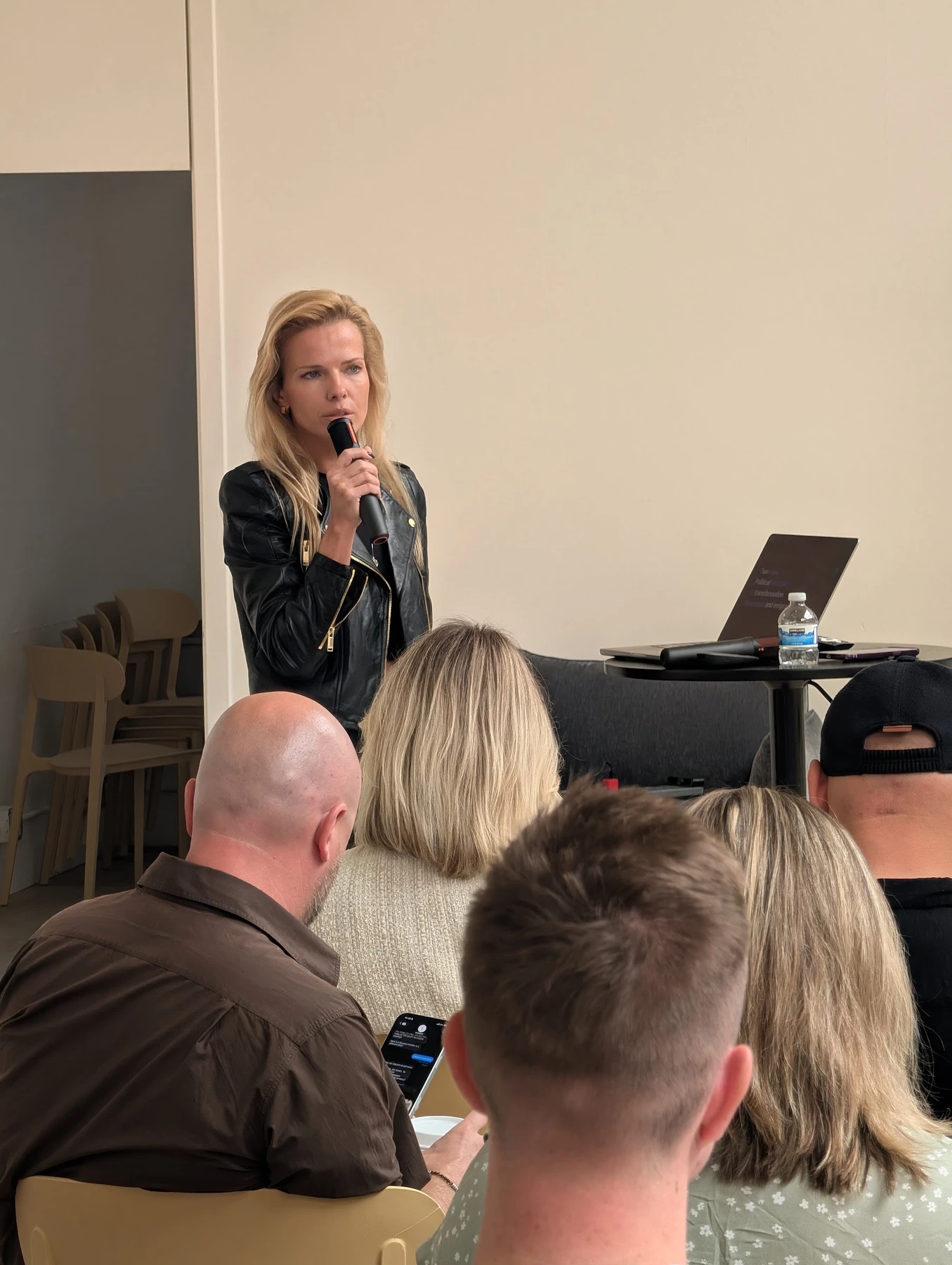
Belarusian Founders gathering in San Francisco during SF Tech Week.Photo source: Founders Fire
The whole idea is in the name: to help founders find their inner fire. Everyone has it, but it’s easier to keep it burning in a community.
05Belarusian founders’ strengths and skills
“Belarusians know how to build products. The next step is learning to sell”
What are Belarusians particularly good at? And what do they lack when it comes to building global companies?
— I’d highlight two strengths shared not just by Belarusians but by the wider post-Soviet tech community. First, engineering education. Second, performance marketing: buying advertising, optimizing funnels and analytics, especially in mobile apps and games. Sometimes we don’t even realize how strong our expertise is. In my view, sales is an area for growth, particularly in B2B, with large contracts, long sales cycles and complex negotiations. But it’s a skill you can develop.
Belarusians often see sales as… pushing something on people. I thought that way for a long time too. It was only in the US that I saw what good selling looks like: the buyer leaves the negotiation happy because you’ve helped solve their problem. That’s where I learned to sell without feeling ashamed of it. Now I go into negotiations thinking: either I’ll genuinely help this person, or we won’t make a deal.
But to do that, you need confidence in yourself and in what you’re offering, especially in the early stages of a business. Imagine you don’t yet have a big product or a strong brand. But you go to a customer and explain what you intend to build. If they hear doubt in your voice, why should they believe you?
So when you have nothing, your confidence sells.